Book and article reviews, Spring 2026
'Fire & Rescue' - Nottinghamshire: 1914 to 1974
By David Needham
Published by Bannister at £19.99
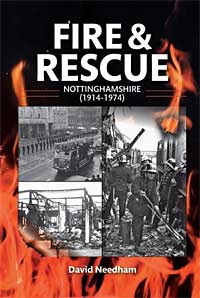
In his latest book, David Needham once again draws upon his experience as a serving firefighter to describe the history of Nottinghamshire Fire Service since 1914, featuring episodes including the 1916 Zeppelin raids, the 1953 east coast floods and the 1968 fire at Nottingham Forest Football Club.
The book offers an excellent read about a history which often by-passes public notice. Anyone who has read David’s previous books will know him as a good storyteller. Here, he uses excellent personal accounts from serving firefighters as well as copious historical sources.
The result is a fascinating and detailed exploration of the county’s fire and ambulance crews in the City and County Brigades, until they were reamalgamated as part of the 1974 local government reorganisation.
The book, which is highly recommended, can be purchased from Nottingham Books, Lowdham, Nottingham, NG14 7BE.
Paul Baker
Lieutenant Joshua Gregory 1790-1838: His Life in Context
By Philip H Marsh
(Farnsfield, 2025) £9.00. 154pp, No ISBN
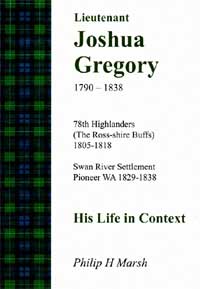
In his previous publications, Philip Marsh has illuminated the lives of individuals who are, in one way or another, associated with the village of Farnsfield. However, far from being confined within the boundaries of this village community, his studies take us beyond the county, placing his central characters into events with international consequence.
This latest study is his most detailed to date - a closely-researched exploration of the life of Joshua Gregory, who joined the 78th Highlanders as an Ensign in 1805 and ended up fighting in some remarkable theatres of conflict, seeing action at the Battle of Maida in Calabria, Southern Italy, in 1806, and subsequently serving on the front line (and as a prisoner of war) in Egypt. Consequently, the book is likely to appeal to readers of military history and international relations as much as the history of Nottinghamshire.
The research has benefited from access to material, including documents, artefacts and pictures, retained by Joshua Gregory’s descendants in Australia. This reflects the far-flung nature of the family’s mobility, as outlined throughout the book. The family’s origins in Lancashire took a decisive turn when they migrated to Nottinghamshire in the 16th century. From here, a branch of the family emigrated to New England, establishing a line of ‘American cousins’, whilst, thanks to the work of Dr Robert Thoroton, the family’s local ascent can be traced. Wealth was gained through buying up land outside of Nottingham’s town boundaries and subsequent generations of family members serving as mayors, sheriffs and MPs for the town - a sure enough sign of their steady social and political ascent.
As with so many men of his generation, Joshua Gregory’s life was bound up with the history of the French Revolutionary Wars and their aftermath. Perhaps inevitably, given the nature of the documentary evidence available, Gregory himself becomes somewhat submerged by the history of the military campaigns at the heart of this book, and we are frequently left to conjecture about the man behind the musket. After the Napoleonic Wars ended, Gregory returned to Nottinghamshire, with a wife and growing family, living and working in Farnsfield and later at Southwell. Lured by the attractions of a newly-established colonial settlement on the west coast of Australia, around the Swan River, Joshua moved his family to the antipodes in 1829, with the hope of a better life. ‘Swan River Mania’ began to grab the nation’s attention, but the system of land grants and difficulties associated with establishing the settlement, led to questions being raised in parliament. Gregory was eventually granted three allocations of land, which he named after familiar Nottinghamshire villages including Edingley and Rainworth. Joshua’s wife Frances, who emerges from his shadow in the later stages of the book, shouldered the burden of educating their five boys, which set them up for life. She also stayed and managed the family holdings after Joshua’s death at the age of 48 - some of his earlier war wounds may have contributed to this outcome.
The book has been well produced, with colour images on good quality paper, but it is disappointing that, in a lengthy study, no index has been provided. A book without an index is like a house without a key — difficult to unlock. Nevertheless, Philip Marsh is to be congratulated on producing a book which, for all its subject’s globetrotting, illustrates the continuing hold which Nottinghamshire exercised over him throughout his life.
Copies available from Farnsfield Library and Farnsfield Local History Society.
Richard A Gaunt
My Story of Nottingham Castle
By David Young
ISBN978-1-0369-1346-5
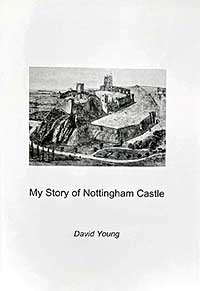
David Young is well known as a volunteer at Nottingham Castle, and it is therefore apt that he has been able to reproduce his weekend talks as a book telling the story of Nottingham Castle. It is obvious that the Castle holds a special place for him.
The book covers the centuries from William I (the Conqueror) in the 11th century up to the end of the Civil War in 1651 when, as David explains, one of the most important examples of medieval architecture was destroyed. Since then, the Castle has been used in many ways but, as David points out, the great story of the Castle is not fully understood.
David, through his book, shares with the reader not only the historical importance of Nottingham Castle, but also explains why, for David, it should be remembered that once it was the most important castle in the history of England and why its place in history needs to be restored.
I should add that I read this book and wrote in pen this review sitting on the terrace of the Kasbah in Imlil, Morocco and saw parallels with Nottingham. Once a ruin, now a hotel, it was once important as a place of refuge which also controlled the trade routes bringing salt and other items into Marrakech. David’s book highlights the historical importance of Nottingham Castle and I can only echo his rallying cry:
Good people, go forth from here and speak of Nottingham Castle. Tell them about the famous and mighty place that once stood on these grounds and join me in restoring Nottingham Castle to its rightful place in the history of England.
Paul Baker